5 Decisions to Make Before You Start a Home Renovation
A successful renovation rarely begins with tile, cabinetry or paint.
It begins with clarity.
By the time construction starts, many of the decisions that will determine how well a home functions—and how cohesive it ultimately feels—should already be resolved.
That does not mean every decorative accessory has to be selected before demolition. It means the decisions that affect space planning, construction, ordering and installation should not be left to chance.
Here are five things I recommend resolving before work begins.
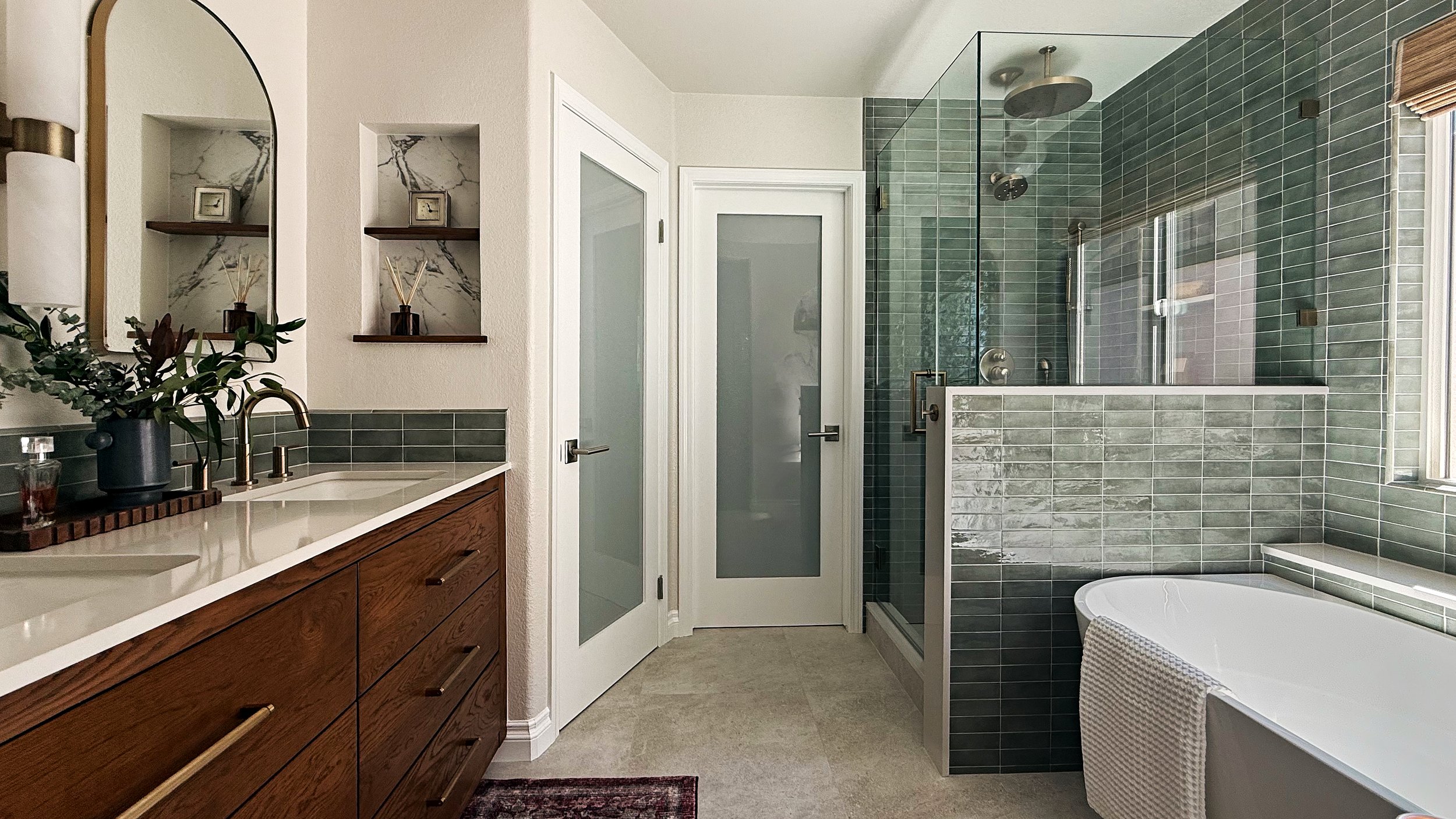
1. Decide how the space actually needs to function
Before choosing finishes, start with how you live.
What feels frustrating in the current space?
What do you reach for every day?
Where does clutter naturally collect?
Which routines feel harder than they should?
Good design is often less about adding more and more about removing friction.
In a bathroom, that may mean considering where skincare is stored, where towels are reached from the shower or where a glass of wine can sit beside the tub.
In a kitchen, it may mean thinking through how groceries enter the room, where small appliances live and how multiple people move through the space at the same time.
These details may seem small, but they are often what determine whether a finished room simply looks beautiful or genuinely improves daily life.
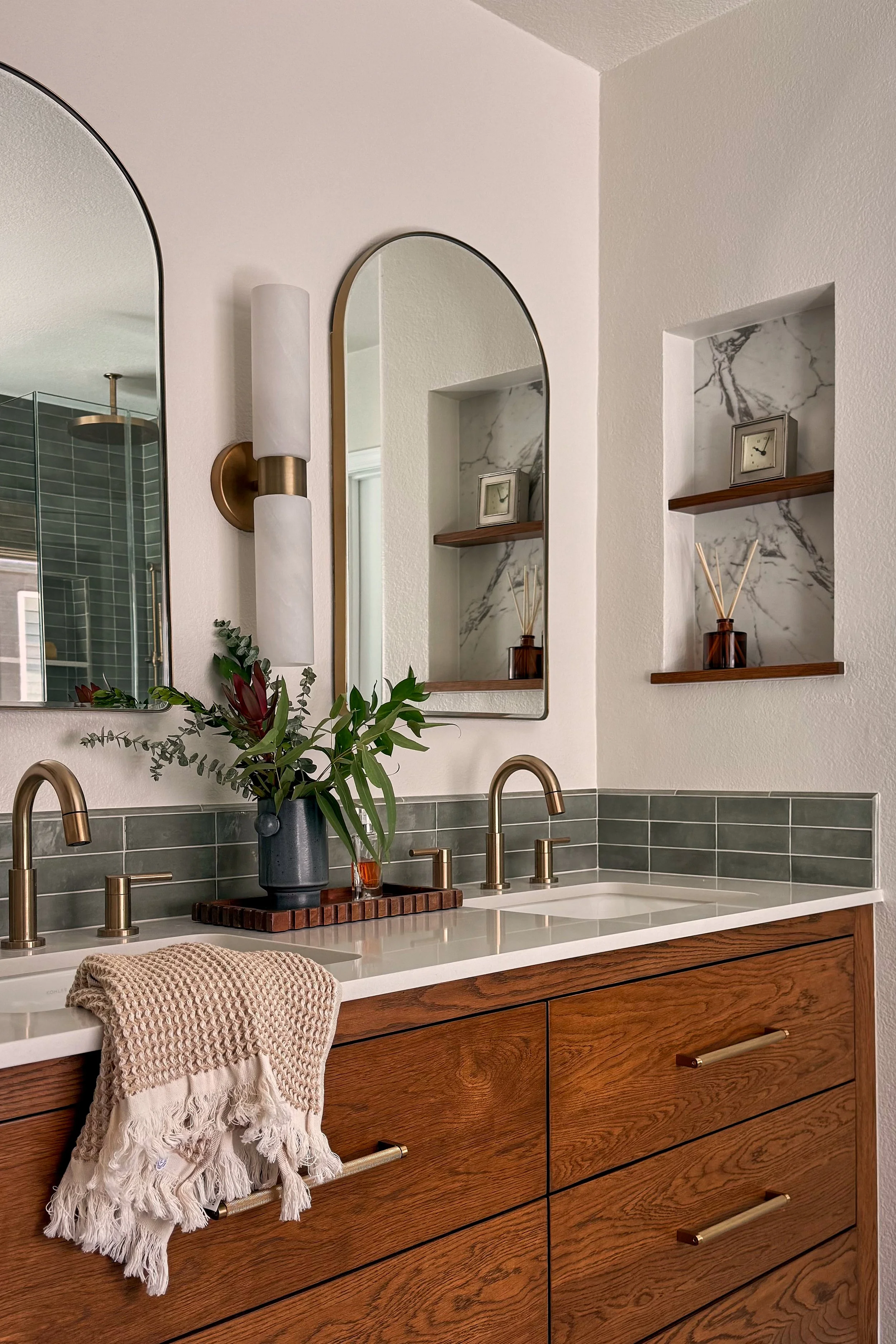
2. Resolve the relationships between the major elements
One of the most common renovation mistakes is selecting individual pieces without considering how they relate to one another.
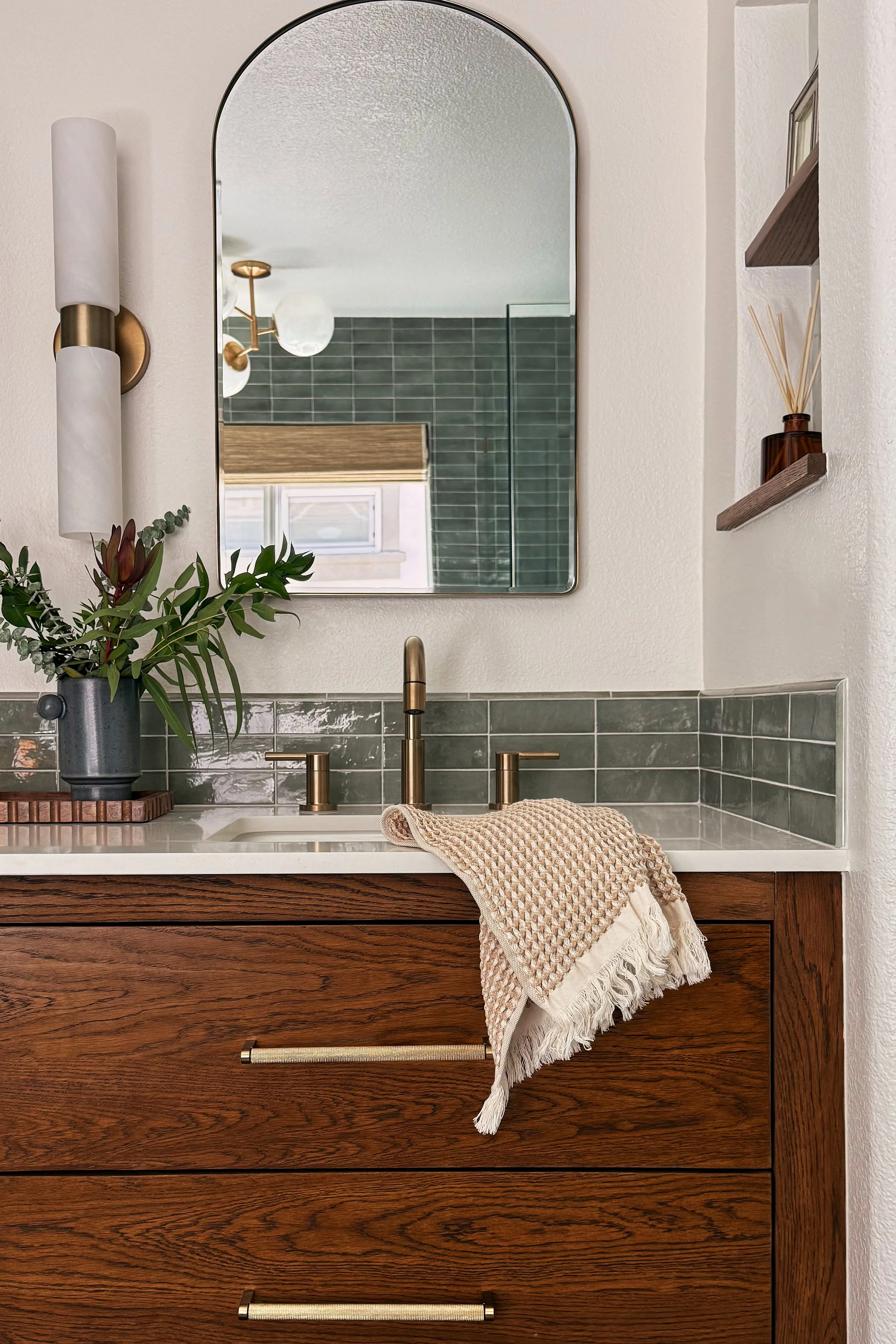
A vanity cannot be considered separately from the mirror.
The mirror cannot be considered separately from the sconces.
The sconces cannot be considered separately from electrical placement.
The cabinetry affects plumbing.
The plumbing affects countertops.
The countertops affect tile.
Everything is connected.
This is why dimensions matter so much.
Before construction begins, the major architectural and functional elements should be evaluated together so that the finished room feels intentional rather than assembled one decision at a time.
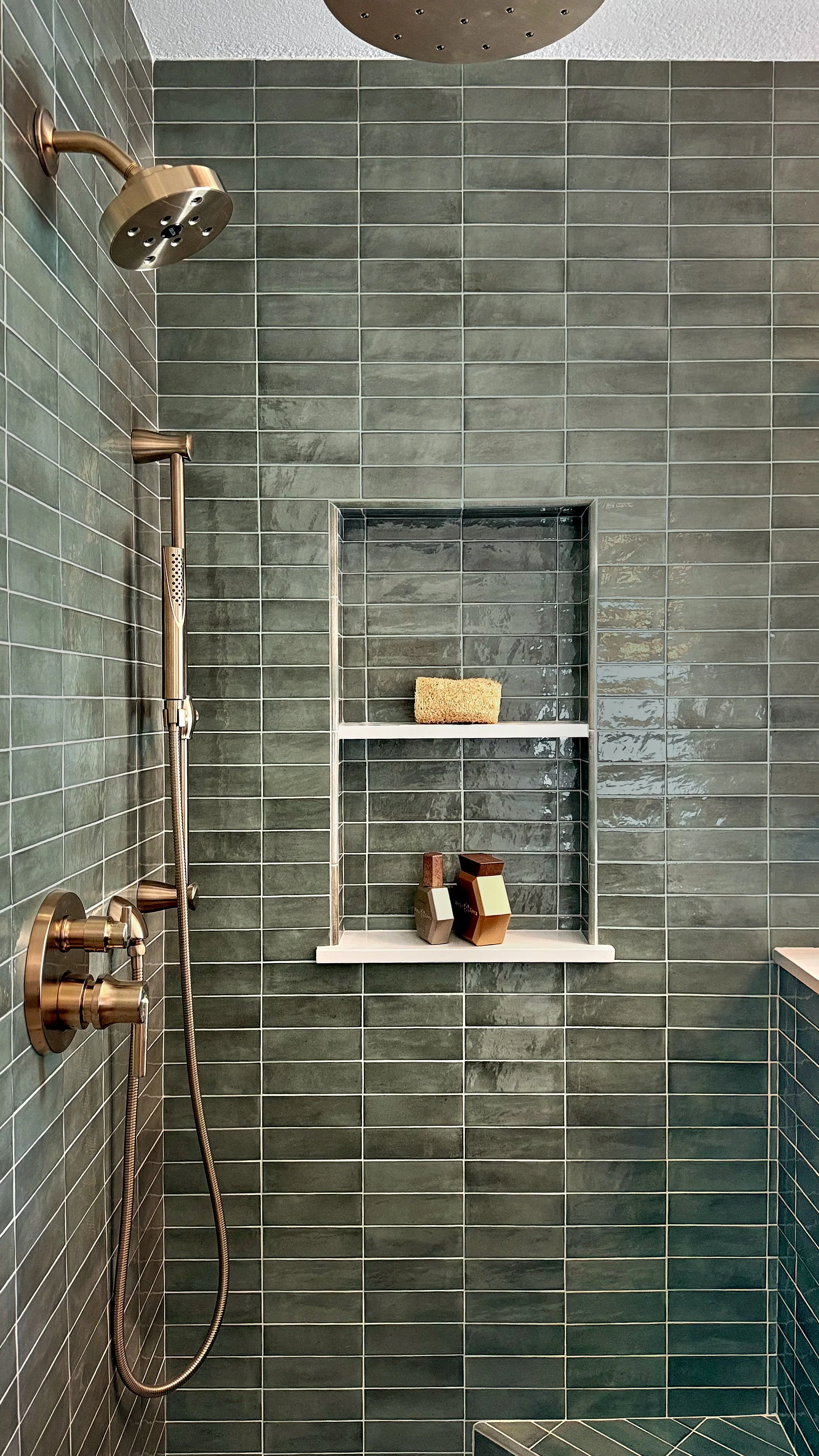
3. Establish the material story before ordering begins
A home does not need every room to match, but it should feel as though the spaces belong to the same story.
That means considering flooring, cabinetry, stone, tile, metals, paint and millwork as a composition.
Rather than asking, “Do I like this tile?” I prefer to ask, “What role does this material play within the whole house?”
Some elements should create contrast.
Others should quietly support the architecture.
And not every surface needs to compete for attention.
A thoughtful material palette creates rhythm throughout the home and makes individual choices feel more timeless.
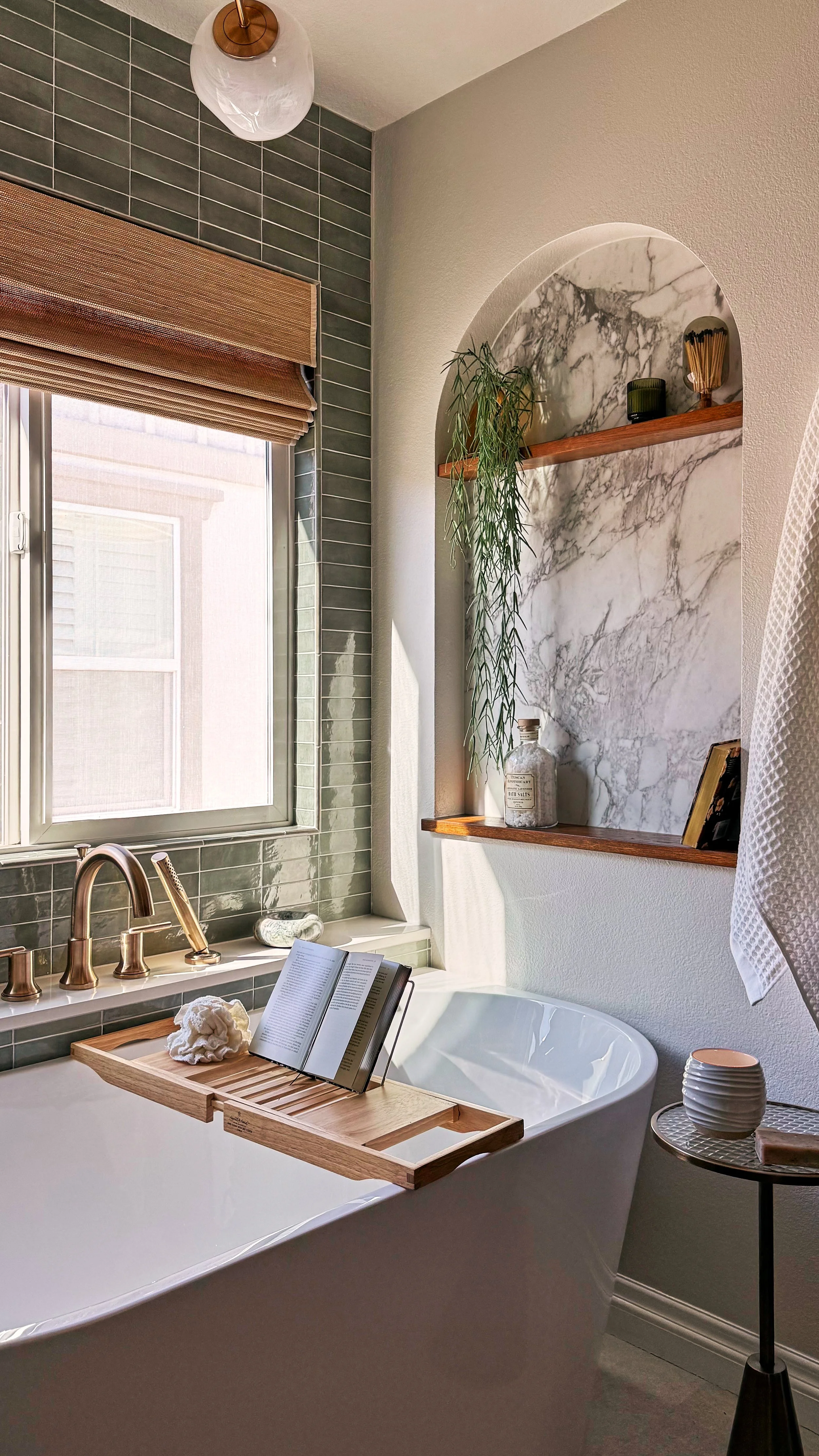
4. Identify the design decisions that affect construction
Some of the most important design decisions are the least glamorous.
They are also the ones that become expensive to change later.
Before construction begins, consider details such as:
lighting and switching locations
outlet placement
plumbing fixture positioning
niches and recessed storage
blocking for accessories, grab bars, shades or wall-mounted fixtures
television and data locations
millwork dimensions
tile transitions and finished edges
appliance specifications
cabinetry clearances
mounting heights
flooring transitions
countertop edge conditions
These decisions influence what happens behind walls, beneath floors and inside cabinetry.
Once construction advances, changing them may require rework, additional labor or compromise.
Good planning gives the contractor clearer information while protecting the design intent.

5. Establish the budget before falling in love with individual pieces
A well-designed home is not the result of spending the most money possible.
It is the result of allocating money intentionally.
Every project has places where spending more meaningfully changes the result—and areas where it may not.
For one home, custom cabinetry may be worth the investment.
For another, it may be the lighting, stone, millwork or furnishings that define the space.
Establishing the overall budget early allows those decisions to be made strategically instead of emotionally.
It also helps prevent a common renovation problem: making a series of beautiful individual selections only to discover that together they exceed the intended investment.
The goal is not to have every answer
Planning ahead does not mean removing all flexibility from a project.
Some decisions are better made in the space.
Paint colors often need to be viewed on the actual walls.
Fixture locations may occasionally need refinement once dimensions can be experienced in real life.
Materials can look different once natural light enters the room.
The goal is not rigidity.
The goal is to resolve the decisions that can and should be made early so that the remaining decisions can be made thoughtfully rather than under pressure.
That is one of the most valuable roles of the design process.
Beautiful interiors are rarely the result of one brilliant selection.
They are the result of hundreds of decisions made in the right order.
If you are considering a renovation and are unsure where to begin, Jamie Loren Home offers design consultations and full-service design for projects throughout Greater Los Angeles and beyond.
You can reach out to tell us about your project and determine the right next step.
Ready to make the right decisions before construction starts?
If you’re planning a renovation and feeling unsure about layout, finishes, budget, sequencing or what needs to be decided before work begins, Jamie Loren Home can help you create clarity before costly decisions are made.
We begin by learning about your home, your goals and where you are in the process. From there, we’ll recommend the right next step — whether that’s an in-home design consultation or a more comprehensive design engagement.
Prefer to begin with a focused design consultation?
Book a 90-minute in-home consultation →